Featured Stories | March 11, 2026
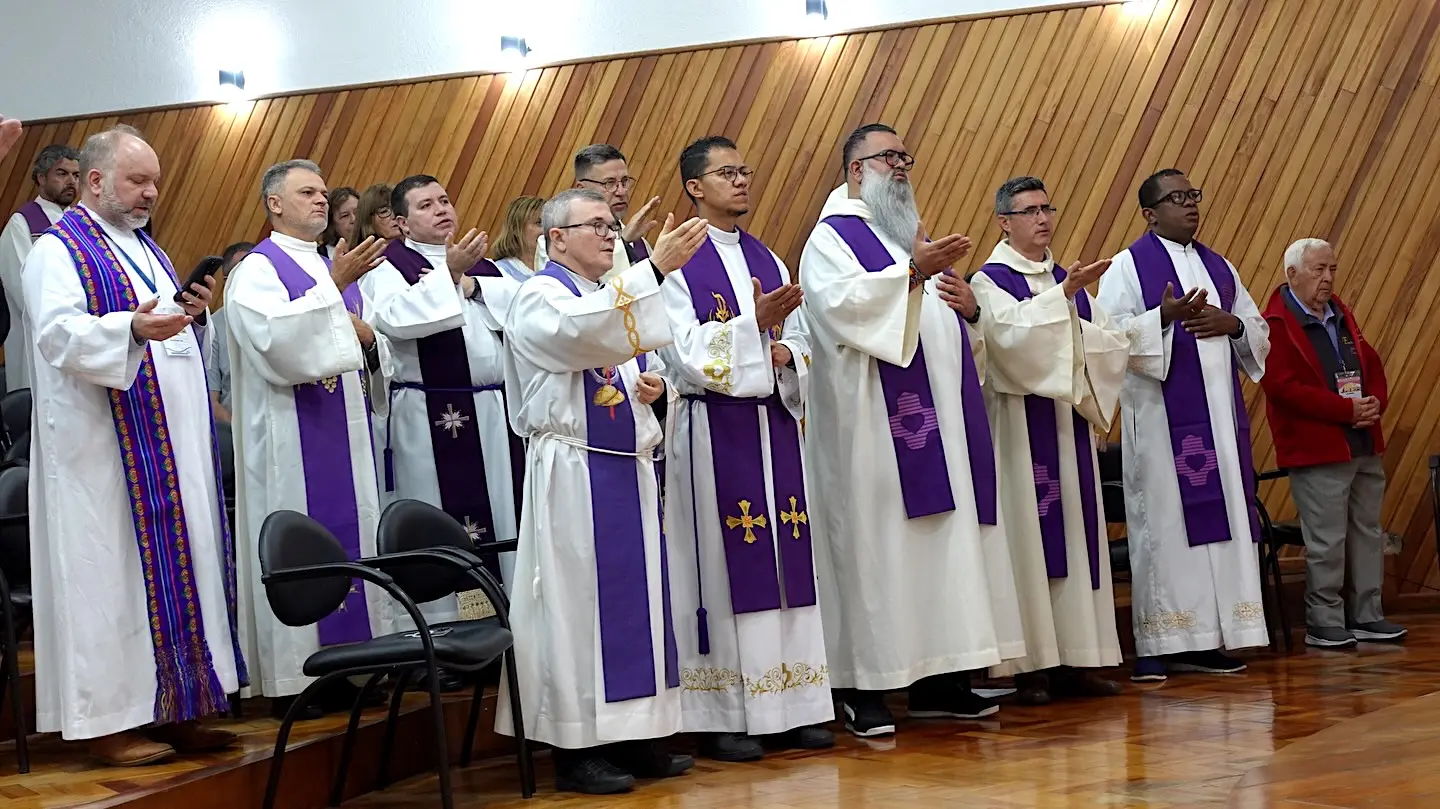
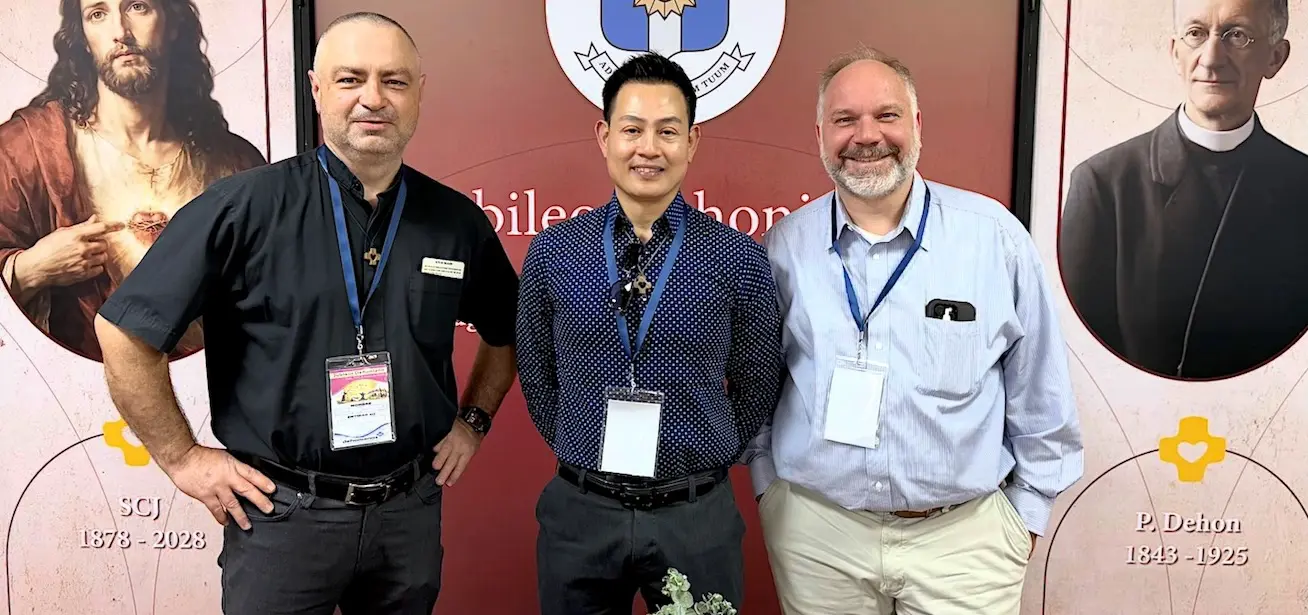
Fr. David Szatkowski was one of three SCJs who represented the US Province at the Dehonian Jubilee celebrations in Ecuador from March 9-13 (he was joined by Fr. Joseph Thien Dinh and Br. Andy Gancarczyk). The Dehonian Jubilee is an international four-year commemoration of the centenary of the death of Fr. Leo John Dehon (August 12, 2025) and 150th anniversary of the congregation (June 28, 2028). Fr. Dave shared the following reflection on the gathering:
“Although the door to a mission in Ecuador was closed for 100 years, God used that closed door to open many others”
-Fr. David Szatkowski, SCJ
The site of the second Dehonian Jubilee celebration was Ecuador. In one of the first presentations of the gathering, Fr. Emerson Ruiz, a Brazilian SCJ, gave insight into why we were celebrating in what could have been considered a “failed mission” in the early days of the Dehonians. The title of his presentation: “Una Congregacíon Misionera: insistencia misionera del Padre Dehon a pesar de los fracasos.” In English, it would be something like “A Missionary Congregation: Father Dehon’s Missionary Insistence Despite Failures”. [Note: all of the presentations at the Ecuadorian celebration are in either Spanish or Portuguese.]
The Priests of the Sacred Heart went to Ecuador in 1888. This was the first time Fr. Dehon sent missionaries out to the wider world, the world beyond Europe. The experience would be pivotal for Fr. Dehon, the Congregation, and ultimately (if indirectly) the US Province. Fr. Dehon’s hope was to establish the Congregation in Ecuador, but history would not prove friendly to that endeavor.
By 1896, the mission would effectively be over. An anticlericalist government came to power in Ecuador. There were conflicts with the local church. Fr. Dehon was being challenged by members of the Congregation in Europe. Ultimately, the SCJs were forced to leave Ecuador. Of the 18 Dehonians who initially went to the country, eight would leave the Congregation.
But the ten who remained would alter the Congregation’s history significantly. From those ten SCJs, two missions were founded in Brazil and Fr. Gabriel Grison would go to Congo in 1897 to bring the Dehonian presence there. The result of the failure in Ecuador was that the Congregation would find new missions in which to proclaim the reign of the Sacred Heart in Souls and Societies.
In the short term, the mission experience in Ecuador allowed the Congregation to become more than an institute of diocesan rite. The possibility of becoming a pontifical rite was more possible. Fr. Dehon and the Congregation gained legitimacy with the Holy See because of the willingness to send religious priests and brothers into the missions. The apostolate of the Congregation began to evolve.
Even the US Province has been impacted by this “failure” in Ecuador. As noted, because of the closing of the mission in Ecuador, Dehonians spread to Congo and Brazil. Provinces in both of these countries now send missionaries beyond their borders, including to the United States. Fr. Floribert Bulo Dhelo in South Dakota and Fr. Joseph Mukuna, who directs the Dehon Study Center, are from the Congolese Province, and Fr. Jean Claude Mbassi is from Cameroon. The Canadian Region as well includes Congolese and Brazilian SCJs; Fr. Gustave Lulendo from DR Congo is in his third term as the Canadian regional superior.
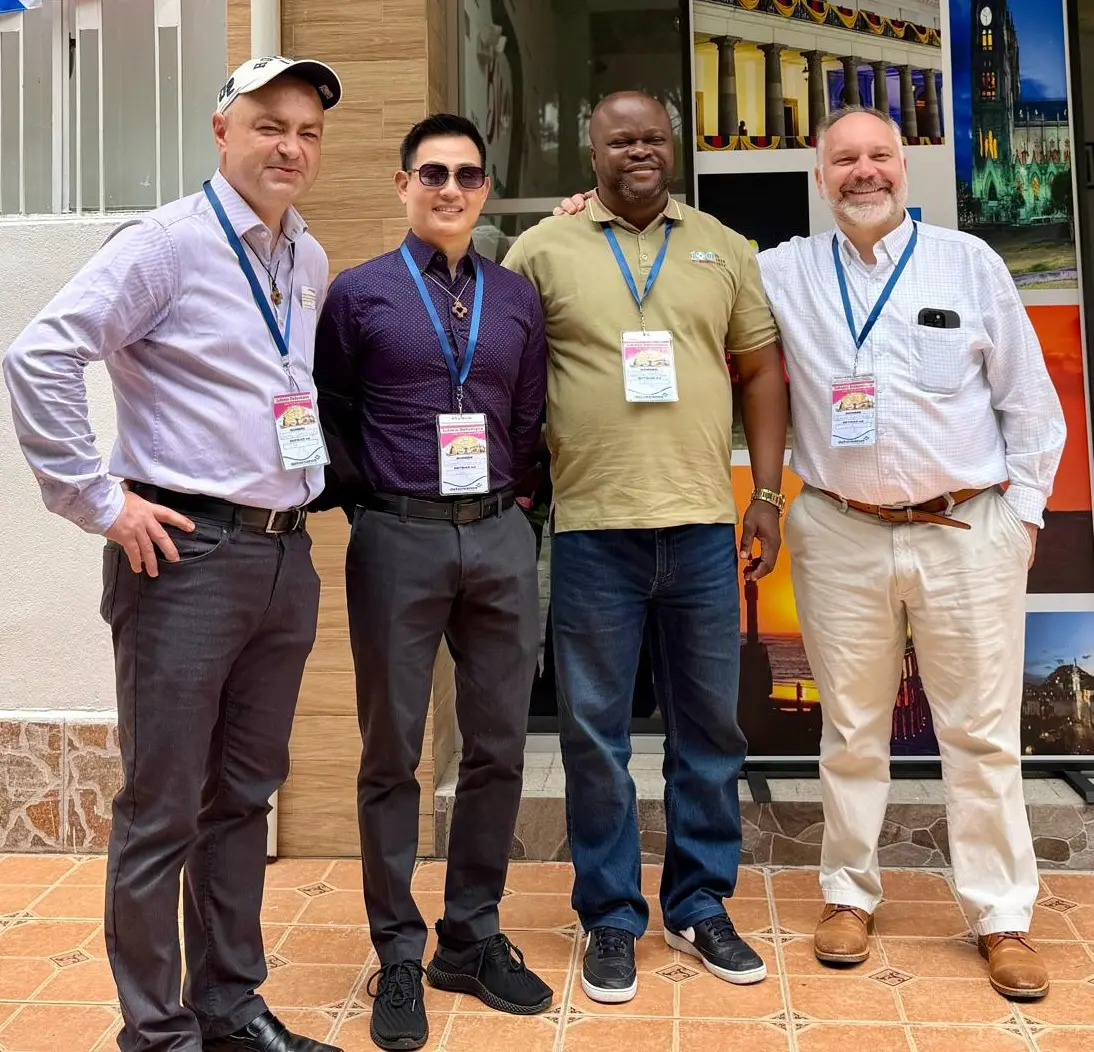
North Americans in Ecuador: Br. Andy, Fr. Joseph, Fr. Gustave and Fr. Dave
We are all formators
After the mission to Ecuador, Fr. Dehon began to write and teach about the Reign of the Sacred Heart in Souls and Societies in a very practical way. He saw the community as being formators of societies and people at all levels in society. This moved the devotion of the Sacred Heart from being one of internal, personal piety to a way of seeing reparation as social, public, and transformative in the ways society is structured – with justice becoming a form of reparation.
When we speak about formation now, we usually mean the ministry of formation of future religious. And that is correct. But as Dehonians, all of us share in the ministry of societal formation. We are called by our charism to teach, form, lead, and promote a society based on the principles of the Church’s social teaching. In this way, all of us are formators. We are formators for our parishes, our cities, and our world. Whether we do this by preaching in a parish, organizing communities to address difficult issues, or helping to promote good environmental stewardship practices, we are promoting a better society, and so promote the Reign on the Sacred Heart in Souls and Societies.
Although the door to a mission in Ecuador was closed for 100 years (the Priests of the Sacred Heart returned to Ecuador in 1997), God used that closed door to open many others.
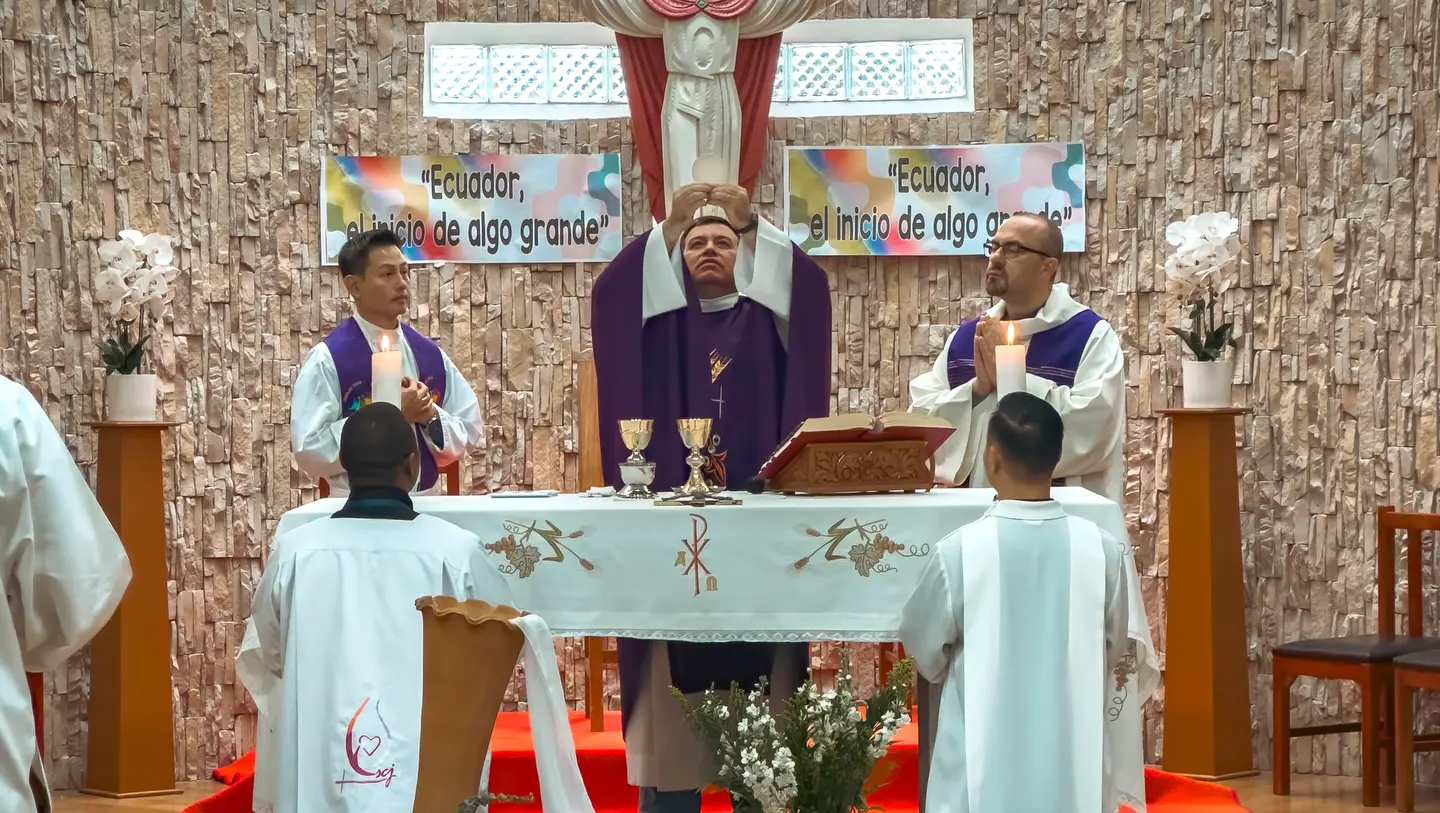
Fr. Joseph (left) was one of the main concelebrants during the jubilee gathering
Links
GENERAL WEBSITE: Coverage of March 9-13 celebration on dehoniani.org
YOUTUBE: Various videos from the week, including presentations and the Jubilee Mass.
FACEBOOK: The DehoniansWorldwide Facebook page has videos and photos from the week.
Presentations for download
The following are English translations of presentations given during the Jubilee celebrations in Ecuador. Click on the desired talk to open the PDF.
“Father Dehon’s Social Catechism and his concept of family”
Presentation by Fr. Emerson M. Ruiz,, SCJ
Introduction
The work Social Catechism (CSC) was published in February 1898, with the aim of providing formation in social morality – a theme already addressed in other works, such as the Christian Social Manual – but here presented in a new format and aimed at a different audience. Most of the work is, in fact, a catechism with questions and answers—a unique genre in Fr. Dehon’s literary production—highlighting his commitment to reaching new audiences.
“Adveniat Regnum Tuum in Father Dehon: Kingdom, reparation, and oblation”
Presentation by Fr. Victor de Oliveira Barbosa, SCJ
Introduction
Among the major categories of biblical theology and Christian spirituality, few are as central as the notion of the Kingdom of God. It runs through the entire Scriptures, from the prophetic promises of the Old Testament to Jesus’ preaching in the Gospels, and constitutes the ultimate horizon of Christian hope. For Dehon, the Kingdom of God is not an abstract reality, but the concrete manifestation of the love of Christ that wants to penetrate people’s lives and the organization of society.