Featured Stories | September 17, 2026
“Sint Unum is in our DNA as Dehonians. ‘May they be one.’ At Fatima, we welcome people from many nations. In our SCJ chapels, we do the same. During the celebration of the Eucharist here [at Sacred Heart Seminary and School of Theology] I see people from around the world. This is our tradition as Dehonians… We strive to build a world with justice and peace. That was the dream of Fr. Dehon.”
-Bishop José Ornelas Carvalho, SCJ, bishop of Leiria-Fátima
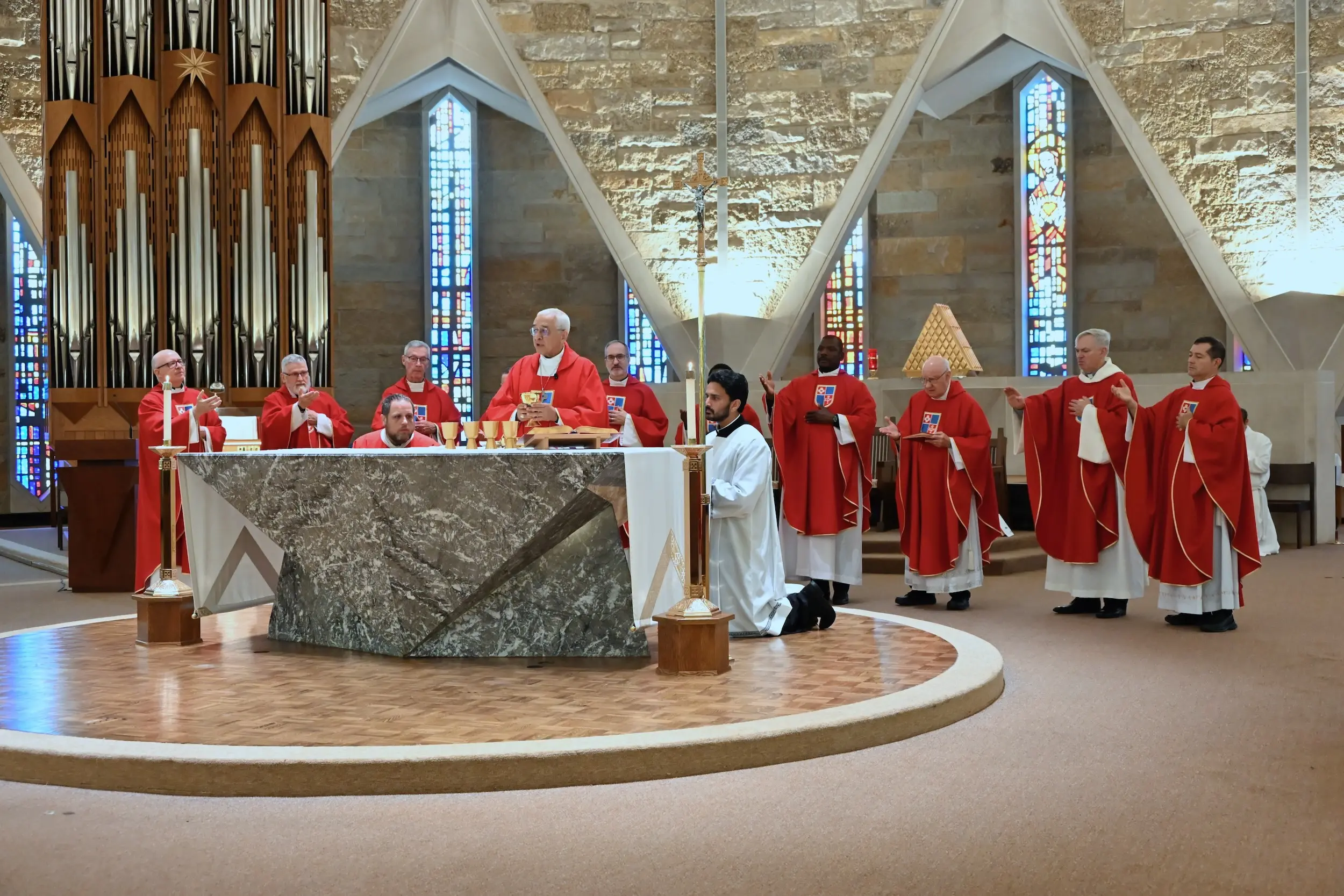
Click here to view photos from the Mass and Lecture
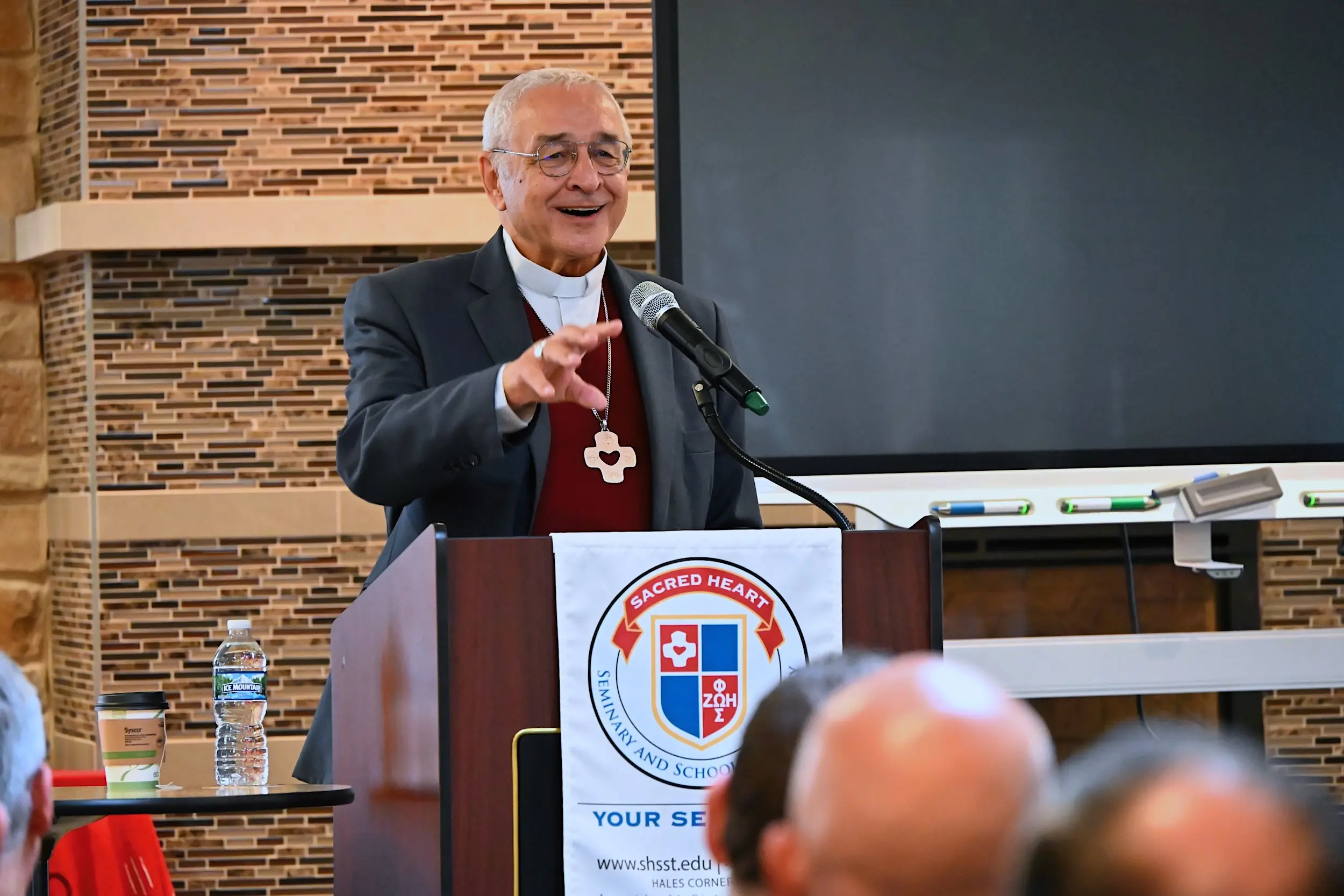
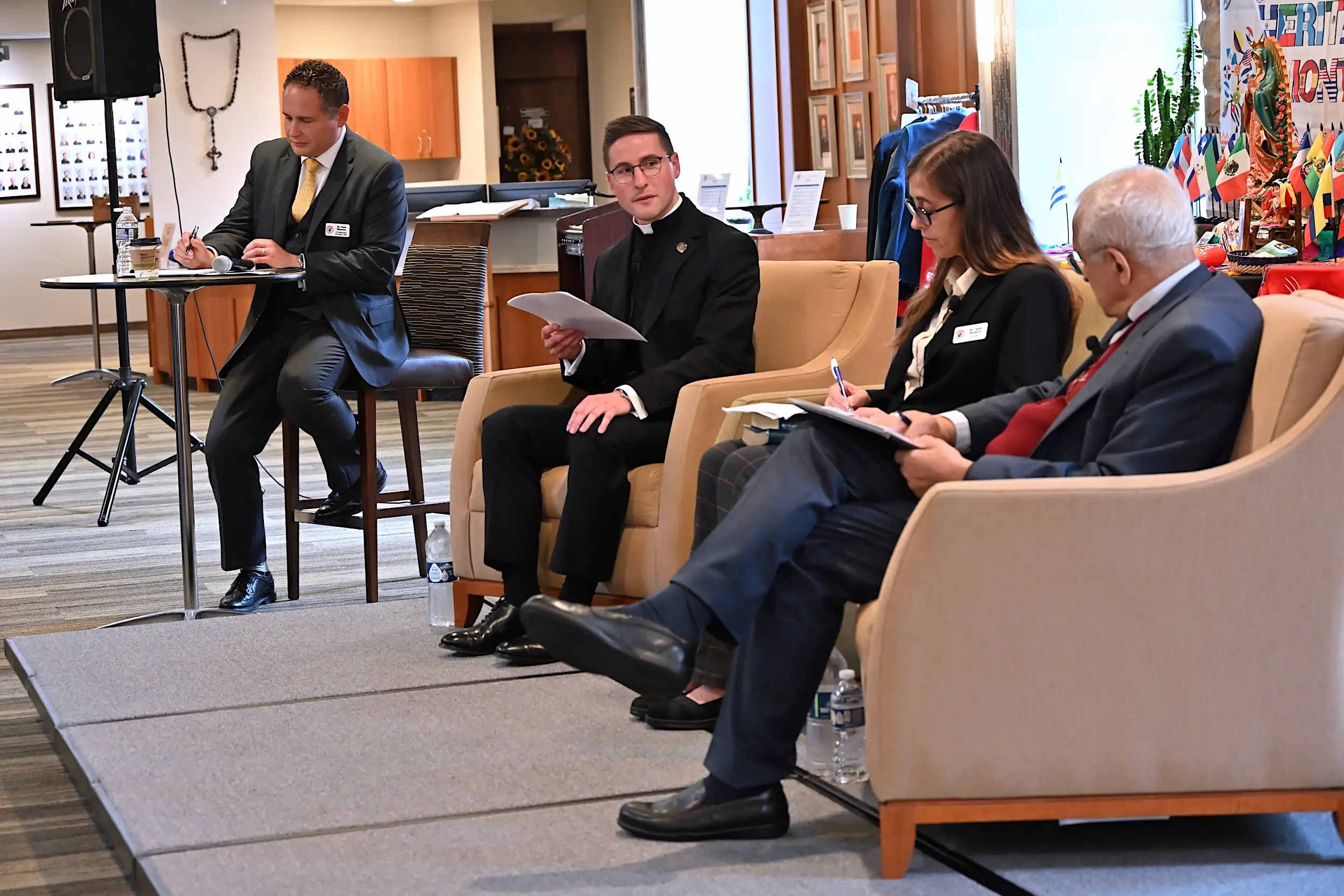
On September 16, Bishop José Ornelas Carvalho, SCJ, was the presenter at the annual Dehon Lecture at Sacred Heart Seminary and School of Theology. His topic? “The Heart of Jesus and the Heart of Mary: Source and Inspiration for the Life and Mission of the Church.”
The last time that the bishop walked the halls at SHSST was in 2013 when he was superior general of the Priests of the Sacred Heart. It was the final stop of his visitation of the US Province. Two years later he would complete his second, six-year term as head of the Dehonians.
His next assignment was to be in Angola. As a seminarian, he served in Mozambique for two years and he hoped to return to the missions.
“But the path ahead is often different than we expect,” he said.
Bishop Ornelas’ path has included studies in Rome and Germany that led to a Doctorate in Biblical Studies from the Catholic University of Lisbon. For many years he was a professor of Sacred Scripture. He served on the Provincial Council of Portugal, was the provincial secretary and then provincial superior of the Portuguese Province prior to his election in 2003 as superior general of the Dehonians.
At the end of his second term as superior, Bishop Ornelas was preparing for the assignment in Angola when a phone call changed his plans.
The former superior general was named by Pope Francis to serve as bishop of Setúbal (near Lisbon) and ordained as bishop on October 25, 2015. “I expected to serve the diocese until my retirement,” said Bishop Ornelas.
But once again, the bishop’s path changed with a phone call. In January, 2022, he was named bishop of Leiria-Fátima. At the time, he was also serving as president of the Portuguese Bishops Conference, a role that he held from 2020 until April of this year.
“I am not UN-happy,” he said when reflecting on his life’s path. “However, I cannot say that I am ‘happy.’ To say that I am fully ‘happy’ means that I have not dreamed big enough. We must always work to do more. It is a continuing process.”
Fatima is well-known as a pilgrimage destination; people from around the world come to the Sanctuary of Fátima that commemorates the apparition of Mother Mary to three young children. Being bishop of a diocese so tied to Mary has made Bishop Ornelas reflect on the significance of Marian spirituality, part of the theme of his Dehon Lecture.
“I think of how mothers protect, teach and help their children, but also how they work to move them forward, to encourage them to go out and live their own lives,” said Bishop Ornelas. Remembering a conversation that he had with Pope Francis during the Holy Father’s visit to Fatima, Bishop Ornelas spoke of the significance of the Chapel of the Apparitions, built on the spot where three shepherd children (Lúcia, Francisco and Jacinta) are said to have seen Mary.
“The chapel has strong pillars and a roof that protects, just as a mother is strong and protects her children,” said the bishop. “But there are no walls to the chapel, no borders. No passport is needed to enter it. The mother welcomes all, but just as importantly, she encourages her children to go out from under the protection of the roof, into the world, strengthened by a mother’s love.”
Pilgrims who come to Fátima seek the “Mother Church,” said Bishop Ornelas, and many arrive with significant needs, including children with physical disabilities or other challenges. Offering practical help “has to be a part of the spirituality of Fátima,” he said. “There is no spirituality if there is no action.”
The Shrine offers a wide variety of social ministries including medical care and pastoral services for children with disabilities and their caregivers.
“Feet on the ground,” said Bishop Ornelas. “Prayer needs action.”
Sint Unum
When asked how being a Dehonian impacts his ministry as bishop of Fátima, Bishop Ornelas answers in two words: “Sint Unum.”
“Sint Unum is in our DNA as Dehonians,” he said. “May they be one. At Fátima, we welcome people from many nations. In our SCJ chapels, we do the same. During the celebration of the Eucharist here [at Sacred Heart Seminary and School of Theology] I see people from around the world. This is our tradition as Dehonians. We come from different regions, we may not always sing the same, but we sing together, we are in prayer together. We strive to build a world with justice and peace. That was the dream of Fr. Dehon. That was the dream that Pope Francis shared with his vision of the Synodal Church…
“It was a blessing as superior general to have the possibility of traveling around the world to see the many faces of the Church, the real faces, real problems and real achievements.
“We are one. Sint Unum.”
The Heart of Jesus, the Heart of Mary
The focus of Bishop Ornelas’ Dehon Lecture was on the spirituality of the heart, which has long been a physical reference for “feelings, aspirations and relationships,” said the bishop. “The heart of Mary is a maternal expression of the heart of Jesus.”
The bishop concluded his lecture by noting that “The spirituality of the heart of Jesus focuses the attention on the human person of Christ, using the symbolic character of the heart as an expression of His love and total self-giving for humanity…
“The proposal of the heart of Jesus is not only a poetic-theological idea,” he added. “It is a call to the constant renewal of our communion as sons and daughters, as brothers and sisters in Christ.”
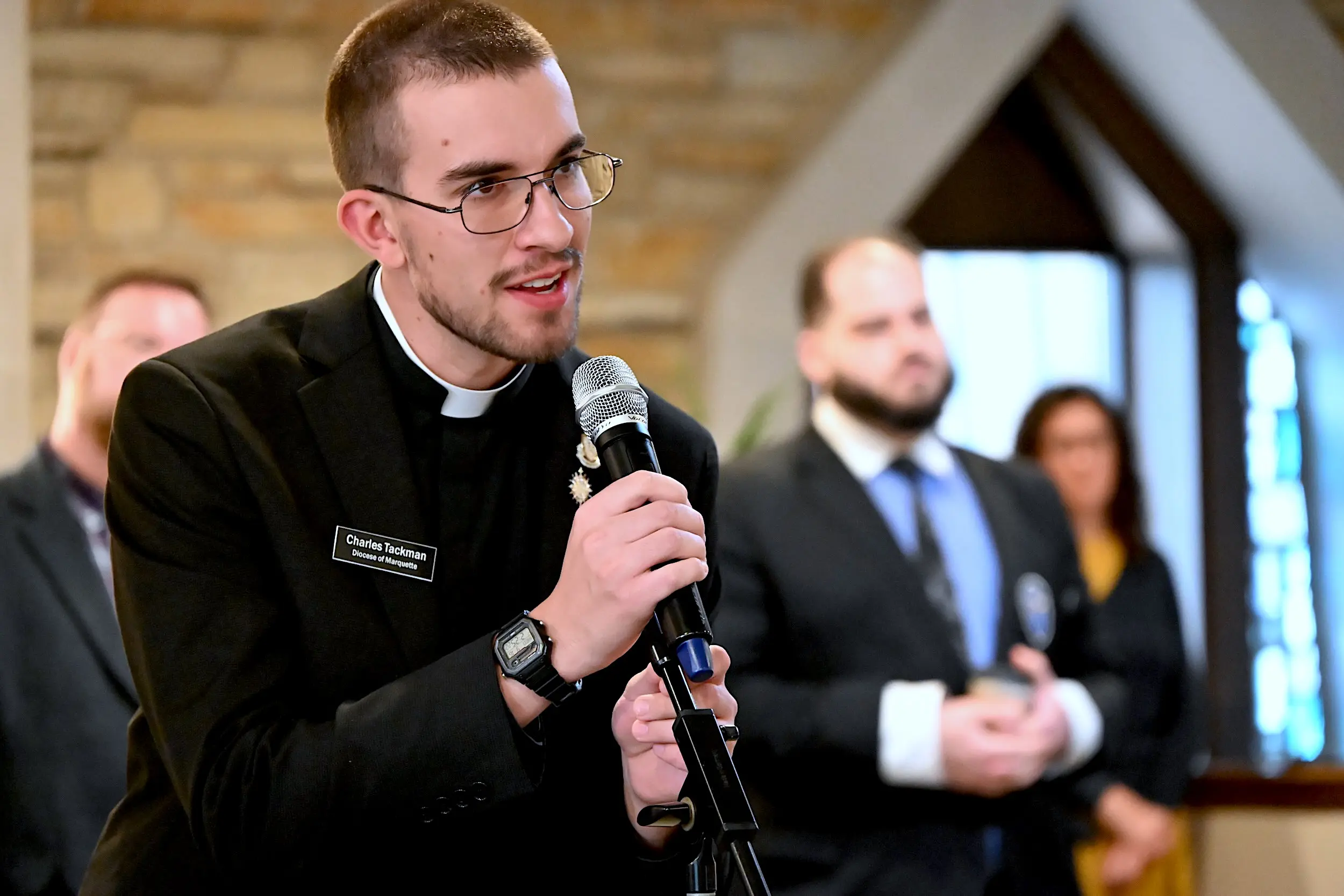
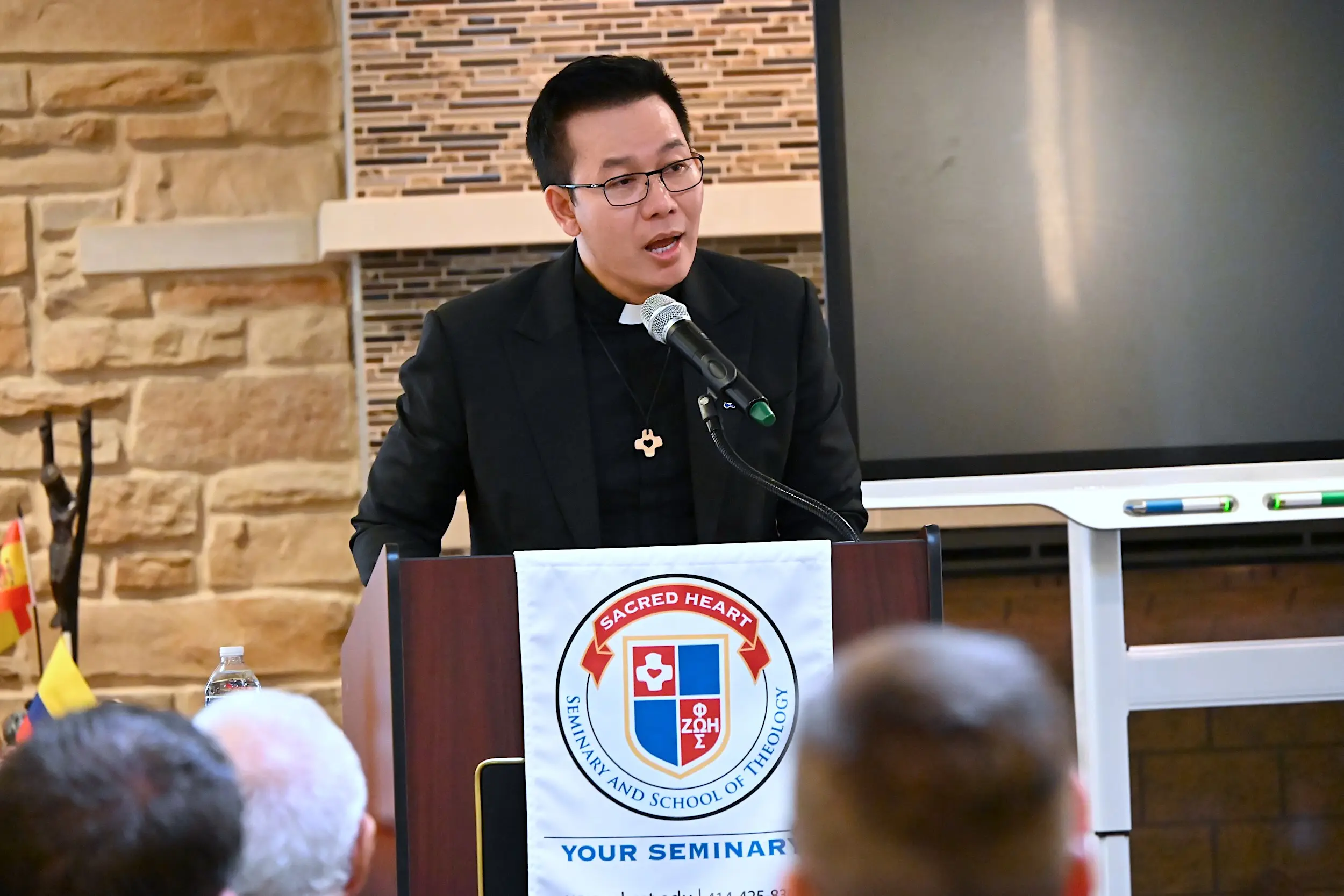
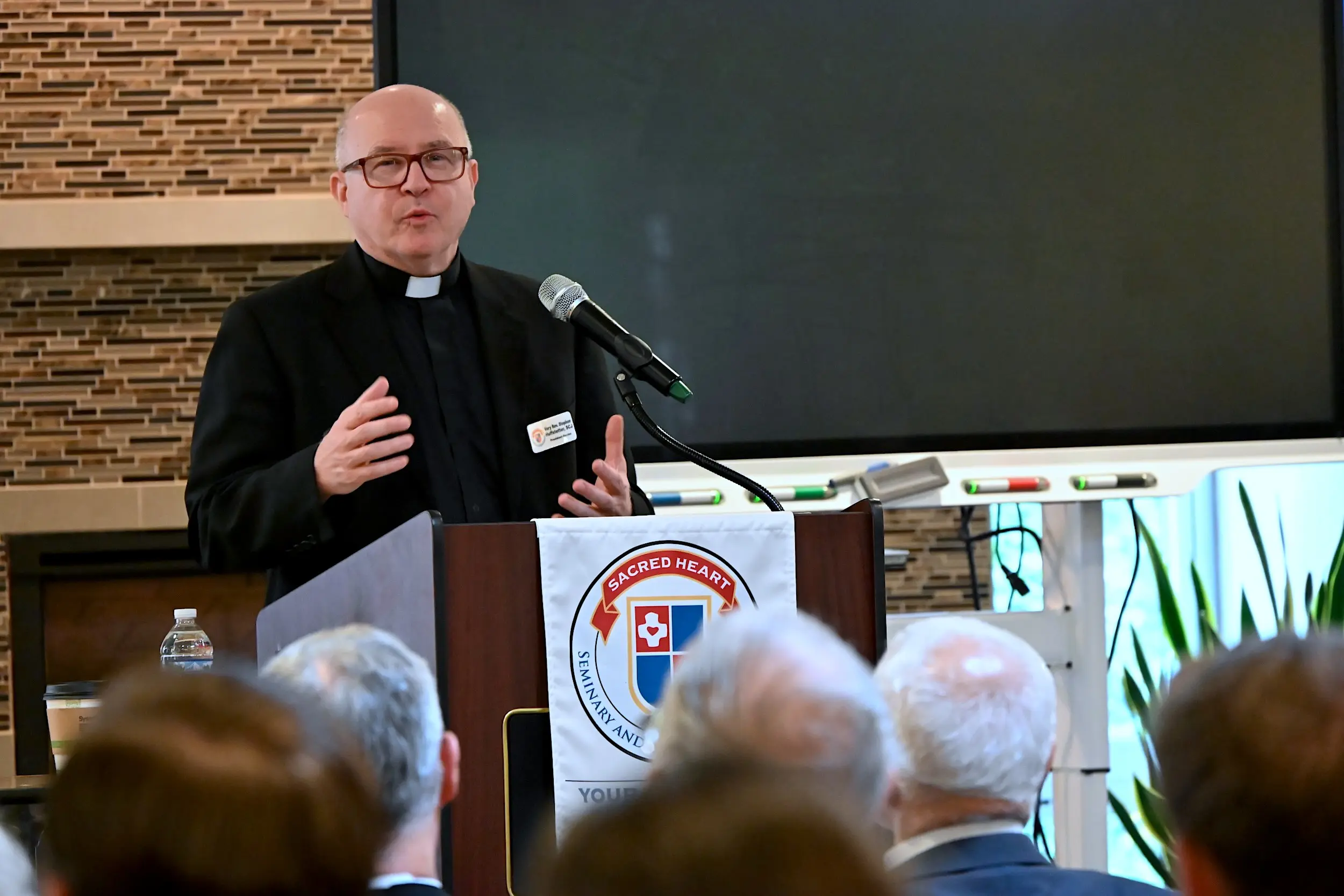
The Dehon Lecture concluded with brief reflections by Dr. Julie Newberry, Assistant Professor of Scripture Studies at SHSST, and Fr. John Baumgardner, Vice Rector of St. Francis Seminary and Director of Human Formation for the Archdiocese of Milwaukee, followed by a Q&A.
Click here to view photos from the Mass and Lecture