
Featured Stories | August 13, 2026
“We are convinced that, were Fr. Dehon alive today, he would engage this emerging social question [Artificial Intelligence] with the same passion and pastoral concern that he brought to the challenges of the Industrial Revolution in the 19th century.”
Fr. Joseph Mukuna, SCJ, director of the Dehon Study Center
Jump to Supporting Resouces and Recordings
As a part of the Dehonian Jubilee (the multi-year commemoration of the centenary of the death of Fr. Dehon in 1925 and the 150th anniversary of the congregation’s founding in 1878), on August 12th the Dehon Study Center hosted the first of a three-part series on “Human Dignity in the Age of Artificial Intelligence.” Participation was both in-person at the SCJ’s Provincial Conference Center in Franklin, WI, and via Zoom.
“We chose this topic because AI is rapidly transforming society and raising fundamental questions about human dignity, responsibility, and the common good,” said Fr. Joseph Mukuna, SCJ, director of the DSC. “The colloquium seeks to familiarize participants with the Church’s vision and to foster thoughtful dialogue on one of the most pressing issues of our age.”
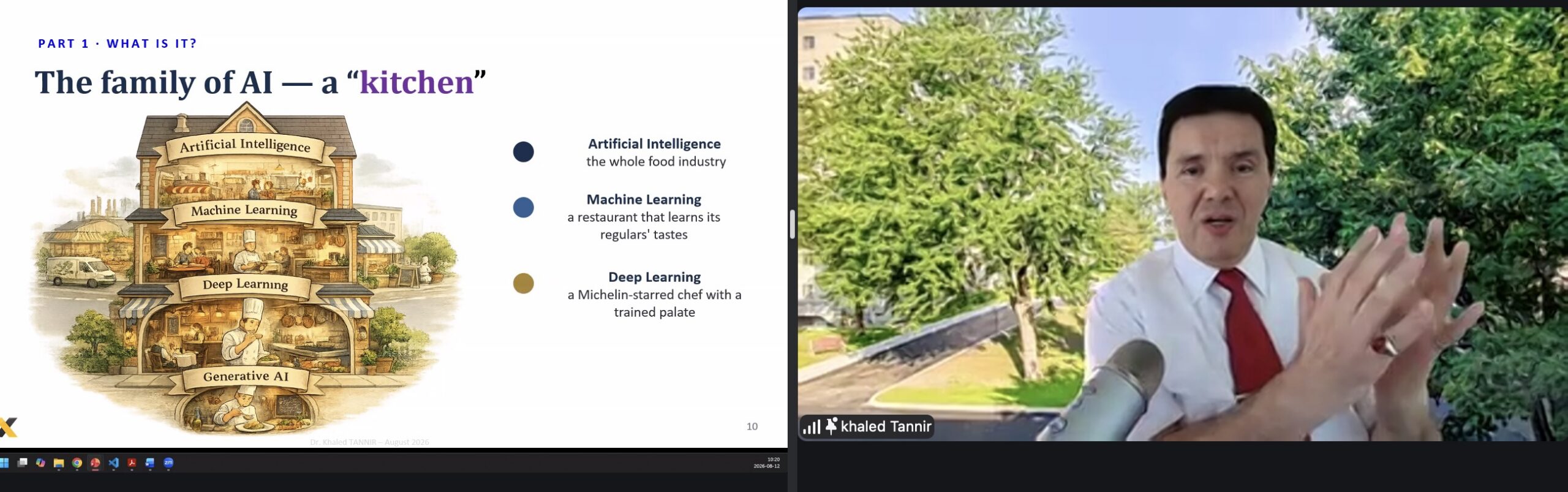
Dr. Tannir spoke to participants via Zoom
Speakers at the initial session included Dr. Khaled Tannier, an AI and data engineering expert who specializes in developing generative AI (he is also a lecturer at McGill University’s School of Continuing Studies in Montréal), and Fr. Ricky Manalo, CSP, Ph.D., a theologian, author, and co-creator of CatholicFaithAI.org with the Daughters of St. Paul. He is a frequent speaker on AI from a Catholic perspective, including a presentation at the Vatican on the prophetic role of the Catholic Church in the age of AI.
The backdrop of the colloquium’s overall theme was Pope Leo XIV’s encyclical Magnifica Humanitas, in which the Holy Father urges the “safeguarding the human person in the age of artificial intelligence.”
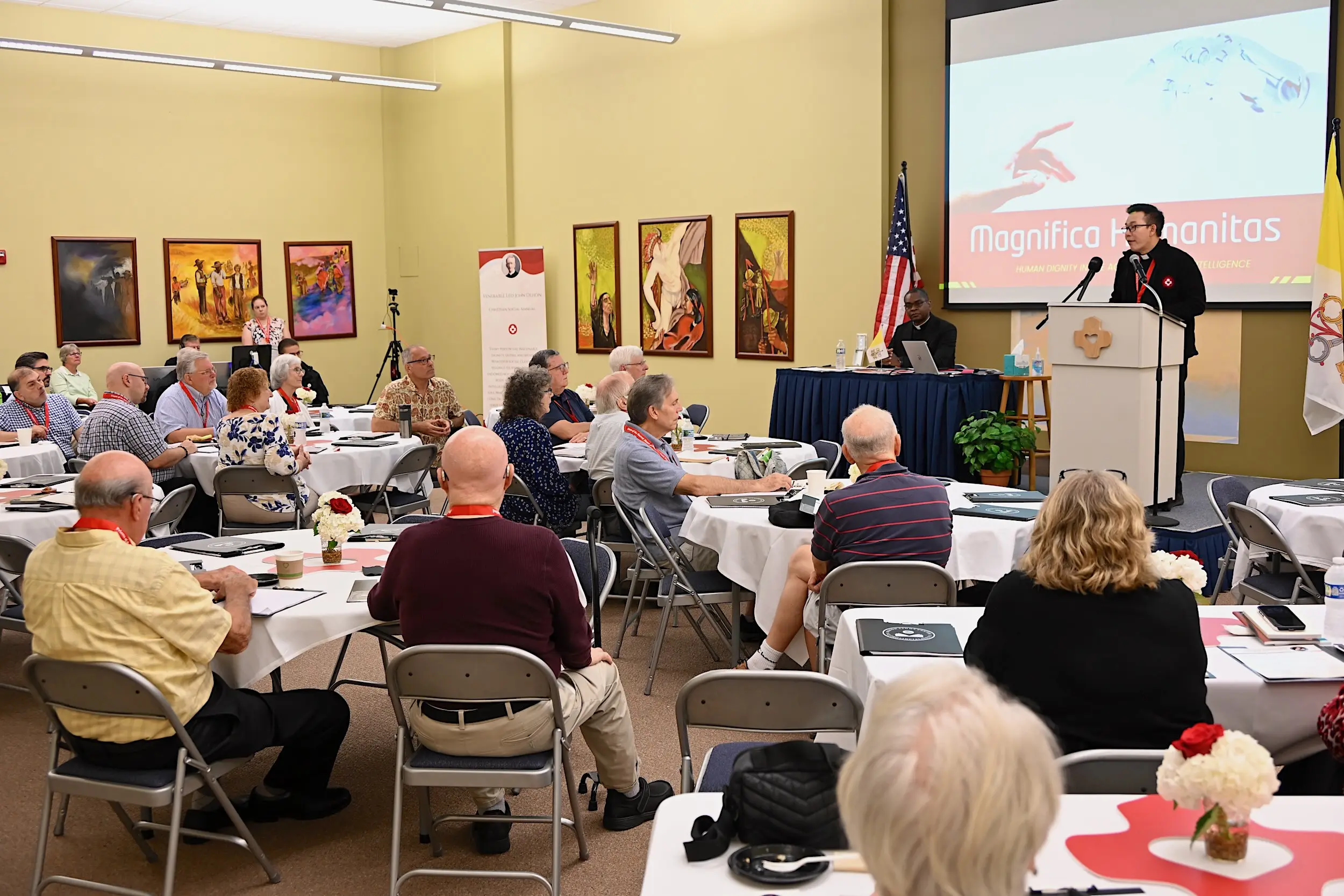
Fr. Vien welcomes participants
The encyclical echoed themes addressed by the Pope’s namesake, Pope Leo XIII, in Rerum Novarum, regarding “industrial capitalism and the transformed conditions of labor,” said Fr. Ricky. To reinforce the connection between the two encyclicals, Magnifica Humanitas was released on the 135th anniversary of the publication of Rerum Novarum.
Rerum Novarum “became one of the foundations of modern Catholic social teaching,” continued Fr. Ricky. In Magnifica Humanitas, “Pope Leo XIV connected the Church’s response to the Industrial Revolution with the need to speak again as Artificial Intelligence begins to reshape work and the distribution of social power.”
According to Dehonian tradition, during an audience with Pope Leo XIII in 1888, the Holy Father asked Fr. Dehon to “preach my encyclicals.” The Founder embraced the call, especially in regard to Rerum Novarum, and dedicated much of his life to studying, teaching, and applying the Church’s social vision to the challenges of his time.
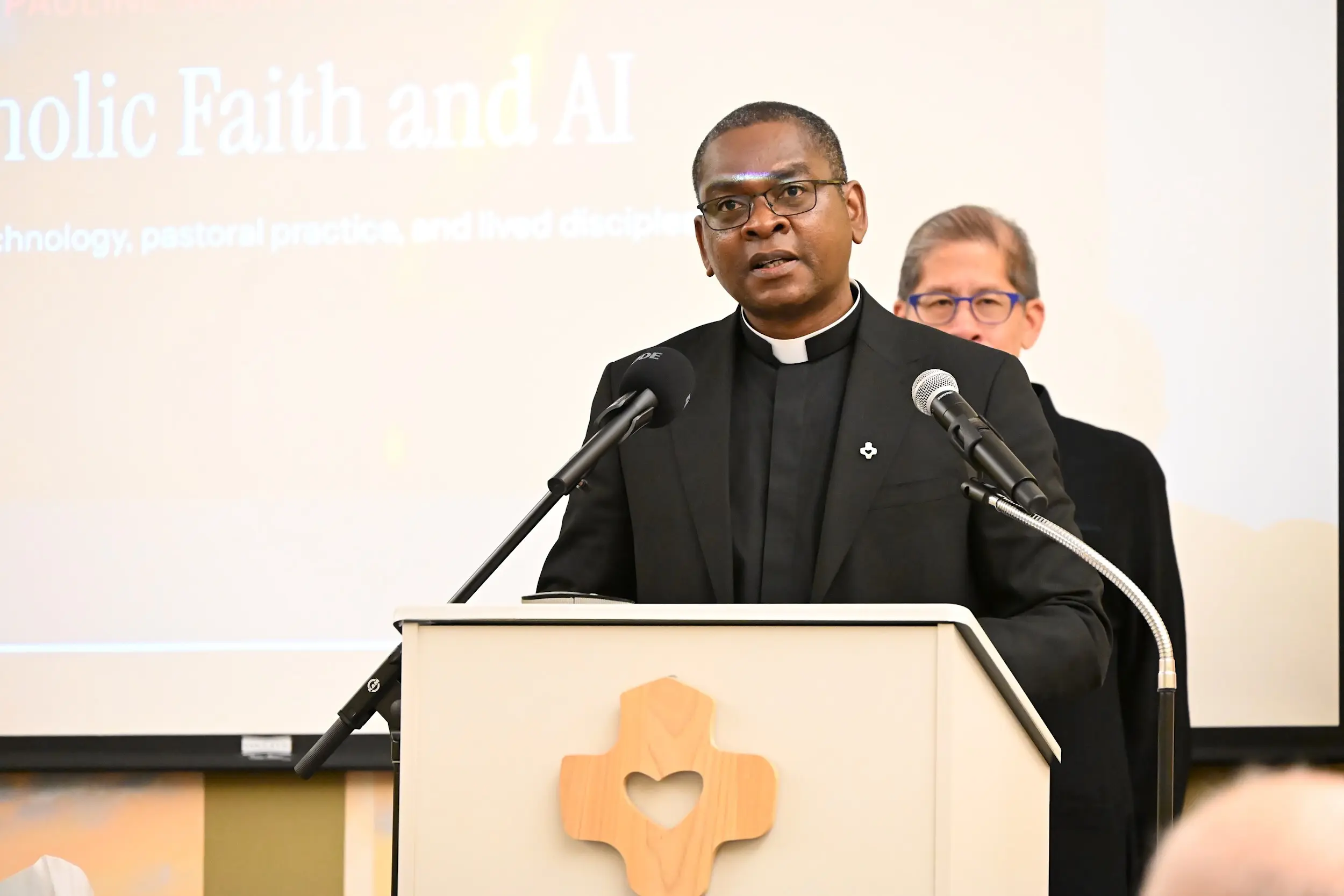
Fr. Joseph Mukuna
“We are convinced that, were Fr. Dehon alive today, he would engage this emerging social question [Artificial Intelligence] with the same passion and pastoral concern that he brought to the challenges of the Industrial Revolution in the 19th century,” said Fr. Joseph.
Dr. Tannir focused much of his presentation on what Artificial Intelligence is and how it “learns” to make predictions from vast amounts of information. He emphasized that AI can be a valuable tool — one he and likely many others at the colloquium use daily — but stressed that it must be used wisely.
“Artificial Intelligence can be ‘confidently wrong’ sometimes,” said Dr. Tannir. “Trust it like a very well-read assistant who is occasionally and convincingly mistaken and check what matters.”
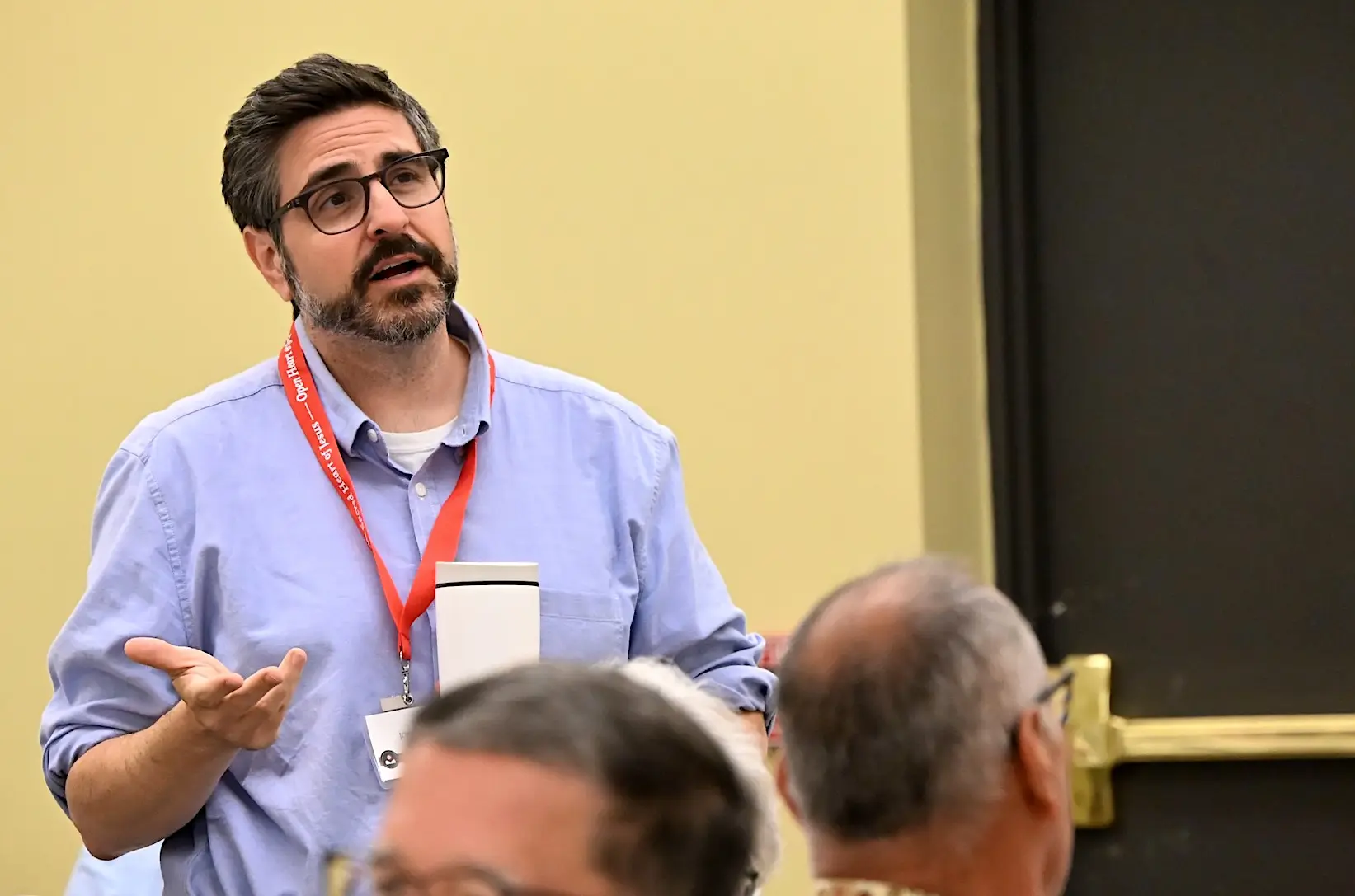
Q&A
Why is the Church speaking to this?
Generally, an encyclical is written to “bring Catholic beliefs into conversation with contemporary concerns and offer moral guidance on a particular subject,” said Fr. Ricky. Just as Pope Leo XIII offered reflection and guidance on the impact of the Industrial Revolution, Pope Leo XIV does the same in regard to Artificial Intelligence.
“Magnifica Humanitas directs us toward the grandeur of humanity as God’s creation and the responsibility to safeguard it,” said Fr. Ricky. “Pope Leo XIV recognizes the genuine good that technology can accomplish but also notes that every AI system bears the marks of human choices…
“[He] warns that control over platforms, infrastructure, data and computing power increasingly rests with major economic and technological actors, and that when power is concentrated in the hands of a few, it can become opaque and evade public oversight. Catholic social teaching offers a process of shared discernment shaped by dignity, the common good, the universal destination of goods, subsidiarity, solidarity, social justice and integral human development. These principles ask whether technological power fosters participation and responsibility, protects the vulnerable, ensures fair access and serves the good of all.”
Each speaker concluded his presentation with a question for participants to consider as they discern the use of Artificial Intelligence individually, and as a society. For Dr. Tannir, the focus was on the unique nature of what it is to be human: “When a machine can imitate so much of what we do, what is it that makes the human person irreplaceable?”
For Fr. Ricky, the question centered on the impact of technology – any innovation – not just AI.
“What kind of common life are we building,” asked Fr. Ricky, “and what kind of people are we becoming as we build it?”
The conversation about Artificial Intelligence will continue in the next two sessions of the colloquium on March 12 and August 12, 2027.
“We will explore the Church’s teaching, consider practical pathways for living that vision, and finally, reflect on a uniquely Dehonian response,” said Fr. Joseph. For more information about upcoming sessions, contact Fr. Joseph at Jmukuna@dehoniansusa.org.
Supporting Resources
Handouts and photos:
PowerPoint slides from Dr. Khaled Tannir‘s presentation
Booklet from Dr. Tannir’s presentation
Handout from Fr. Ricky Manalo’s presentation
Click here to view photos from the colloquium
Video recordings:
Session 1: Dr. Khaled Tannier
Session 2: Fr. Ricky Manalo, CSP
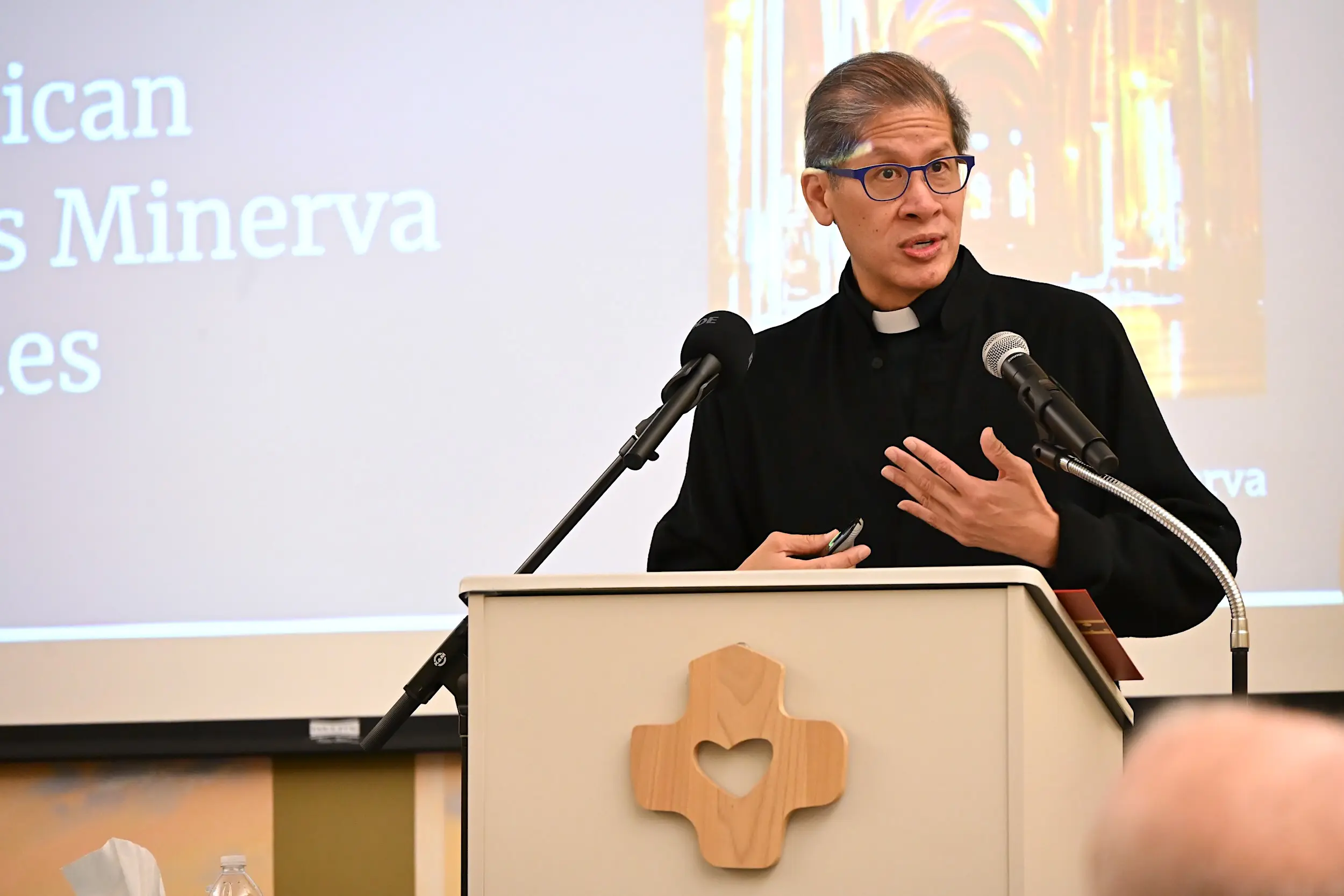
Fr. Ricky Manalo, CSP